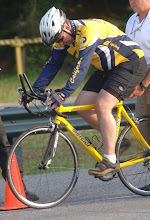
Beakman in Oak Ridge!
Great fun!
"Life is fraughtless ... when you're thoughtless."
In an October 1939 radio broadcast, Winston Churchill described the In Science, Strategy and War: The Strategic Theory of John Boyd, Osinga presents us with a fascinating “deep dive” into the evolution of a brilliant thinker – a thinker who devoted his life to applied learning and teaching. Though it is unfortunate that Boyd did not see fit to publish his theories in book form (unsurprising given his professional environment far from the Ivory Towers of academe), it is evident from his 1,500+ presentations that he rigorously developed and willingly shared his ideas. Boyd’s stamina (both mental and physical) to lecture for more than a dozen hours at a time is testament to his devotion and his determination to succeed.
Osinga nicely complements the work of Boyd biographers (most notably Coram, Hammond and Richards) by dedicating the preponderance of his 300+ pages to how Boyd’s thinking evolved – describing his intellectual influences from the expected (Sun Tzu, Clausewitz) to the unexpected (Popper, Kuhn, Polanyi). Particular attention is given to the influence of classical physicists (
Boyd embodied the now-popular notion of the “Medici Effect”, a horizontal thinker who integrated perspectives across multiple, seemingly-divergent disciplines into a cohesive whole. His insights have proven applicable to a wide array of topics, and foretold of the emerging science of complexity theory (though I dislike Osinga’s use of the composite term “chaoplexity”, which undermines the distinction between “chaotic” – i.e., non-linear and seemingly random – and “complex” – i.e., a large number of interrelated properties or parameters). Given the swagger of the fighter pilot who bested the “best” in air-to-air combat in forty seconds or less, there is no doubt that Boyd – were he alive today – would be a prolific ‘blogger, and a Chicago Boyz contributor whose inputs would outweigh all of our Roundtable writings combined.
While many associate Boyd solely with the “OODA Loop”, he has given us far more than just a lexicon – just as Tom Barnett’s work is far more than simply “Core - Gap” and “Leviathan - SysAdmin”. Regardless of one’s willingness to accept his ideas, the sheer effort Boyd invested in his research – and Osinga’s effort in compiling the salient points for us – is an invaluable tool in anyone’s intellectual toolbox.
The motto of the U.S. National Archives and Records Administration is Litera Scripta Manet: “The written word endures.” It is ironic that intellectuals tend to revere the commentator more so than the subject on whom they write: Herodotus over Leonidas, Thucydides over Pericles, Clausewitz over Napoleon. If history is consistent, then in a hundred years the name Osinga may be equally associated with the name of Boyd.
Labels: books, boyd, chet, complexity, Education, history, innovation, reviews, science, xGW
Labels: Education, football, innovation, travel, zenpundit

John Kao is a true 21st century “Renaissance Man”. He is a doctor of medicine (holding an M.D. from Yale as well as a Ph.D. in Psychiatry), an entrepreneur (with an M.B.A. from Harvard Business School and 14 years on its faculty teaching “innovation”), who has also been engaged in film making (he was a production executive for 1989 hit sex, lies and videotape and Executive Producer for 1992’s Mr. Baseball), and is an accomplished jazz pianist (spending a teenage summer in L.A. recording with Frank Zappa and The Mothers of Invention).
John is perhaps the world’s foremost “innovation advocate”, and a mentor to many Fortune 500 corporations, government agencies (both
The book continues with an honest critique of
The closing chapters of his book make it “real” by offering prescriptions – from the micro (building personal “dream spaces”) to the macro (crafting a “National Innovation Agenda” and empowered policy-making entities). Although some historical anecdotes are slightly dated (e.g., a reference to Thomas Friedman’s quote that two nations with a McDonalds have never gone to war – the Balkans being the notable exception), the positive aspects of Globalization hold true. And like any prescriptive work that is future-focused, it is here that he is taking the biggest gamble – and will undoubtedly be derided for offering specific solutions that may not stand the test of time. But like the esteemed professor at
Labels: Education, innovation, kao, reviews, science
At this morning's weekly breakfast meeting of the East Tennessee Economic Council in Oak Ridge, hosted at the Y-12 National Security Complex by BWXT/Y-12 President and CEO George Dials, George told the collected community and business leaders that fully half of his skilled labor force (e.g., machinists) is eligible to retire. While there are more than enough physicists and engineers to go around, there is a dearth of master machinists, pipefitters, electricians and other skilled craftsmen to meet the growing demand -- both at Y-12 and in the burgeoning nuclear power industry. George has often said, "You don't want a physicist to fix your plumbing!" (Dr. Thom Mason, Director of the neighboring Oak Ridge National Lab, is a physicist. :-)Speaking analytically and from close to 20 years of firsthand professional experience, the public school system's fundamental problems are an anachronistic orientation (Agrarian calendar, industrial mass production, and Taylorist model, hierarchical control), a breakdown of the home to school social contract and iniquitous, unreliable & irrational funding mechanisms disconnected from the system's legally required objectives. There are other problems, naturally, but those are the major systemic stumbling blocks to wholesale improvement.That being said, it is not obvious to me that the primary alternatives to public education are any better when measured with identical yardsticks (surprisingly, often they are worse). Those that are (usually idiosyncratic programs of high quality) suffer from a lack of scalability. You just can't set up a top-notch Montessori program for 75 million kids - in fact, it's tough to do so for 75. Anything that is scalable - like curricular reforms and high standards featured by many charter schools - can be done more efficiently in public education for reasons of economies of scale. The only reason it isn't done is lack of political will and budget.
Homeschooling works best when the parents are exceedingly motivated and well educated, and their children are young and intellectually curious. Many home schoolers abandon the effort when their kids hit junior high and high school and the subject matter becomes more specialized - these kids either come to me performing well-above grade level (about 25-30%) or below grade level due to significant gaps in content knowledge because Mom really didn't understand fractions or the Civil War or whatever and skipped teaching it.
Catholic schools vary in quality these days just like public schools because the number of members of religious orders teaching in them (highly educated folks working cheap) has declined severely. In Illinois for example, St. Ignatius College Prep is a top high school but the average Catholic high School here is staffed by secular teachers who weren't good enough to find jobs in the public school system. What Catholic schools offer as a system that public schools do not is a culture, discipline and a sense of identity that some people find valuable (and a leg up in applying to Notre Dame, DePaul, Gonzaga etc.).
Other private schools, military academies etc. tend to be highly specialized in terms of mission.
Essentially, instead of judging which system is best, I'd look at what specific schools are available in your area and select the one that is relatively better than the others. If they are about even, save yourself a bundle of cash and use the public school system - unless safety/discipline is a concern.
While the U.S. collegiate system is the envy of the world, our primary and secondary schools have become punching bags for the media, politicians, and disaffected parents. This week's U.S. News & World Report even has an article on "education consultants" who, for a fee, will help parents find "good grade schools". This same article decries our nation's "sagging SAT scores", with a USA Today-esque graphic helpfully showing the downward trend in Reading (508 two years ago to 502 today), Math (520 two years ago to 515 today) and Writing (497 last year, when this module was introduced, to 494 today). Maximum possible is 800. Überblogger ZenPundit has blogged extensively on the topic of public schools.
This is why we're so glad to live in Oak Ridge, Tennessee. Who'd have thunk that one of the best public school systems in the nation would be nestled in the hills of southern Appalachia? In fact, both Newsweek and Expansion Management magazine have consistently ranked Oak Ridge as among the best school districts in the nation -- with Oak Ridge High School garnering accolades from them as well as the Wall Street Journal as one of the best high schools in the country.